How Movement Changes the Way You Live
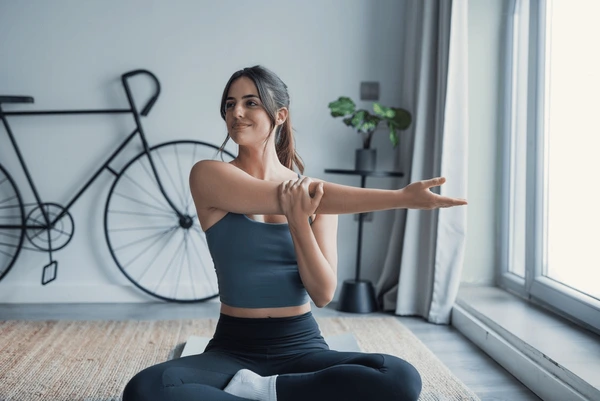
Most people think movement changes your body. Stronger muscles. Better flexibility. Improved posture.
And yes—those things absolutely happen.
But if you’ve ever consistently moved your body for a period of time, you know there’s something harder to describe that starts to shift, too. It’s not just physical. It’s how you arrive in your day.
How quickly you tense when something stressful happens.
How much space you feel you have in your own thoughts.
How grounded you feel when life gets loud.
How you move through ordinary moments—getting out of the car, standing in line, answering a hard email.
Movement doesn’t just stay in the studio. It follows you everywhere. This is the part of movement most people never talk about—but it’s often the most important shift of all.
The Pattern Most People Never Notice
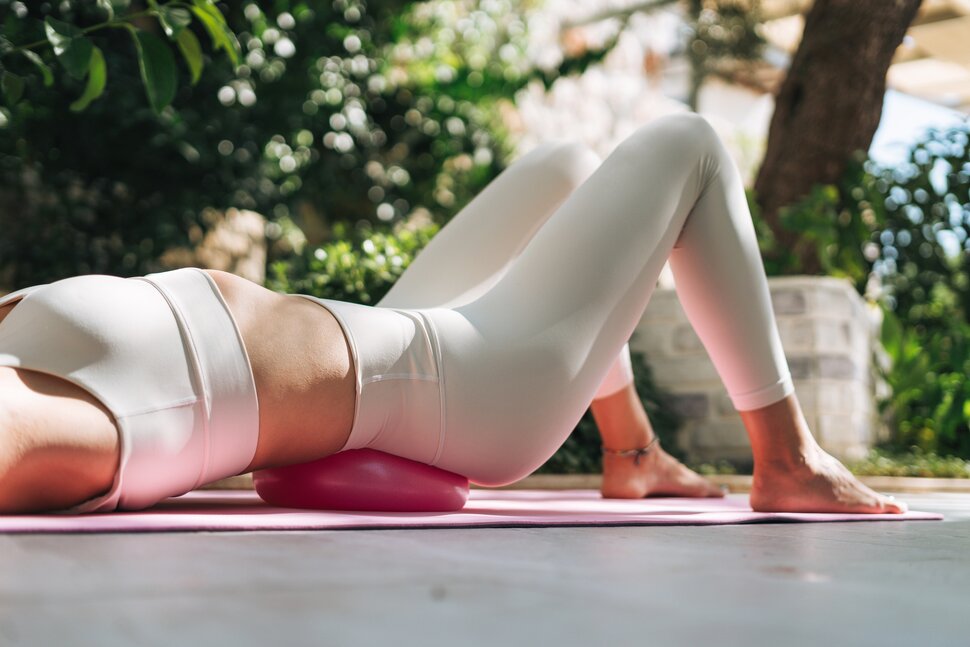
Most movement is taught as something you “do” to your body. Something to complete.
You show up.
You work out.
You check it off.
You stretch it out.
You move on.
But your body doesn’t experience movement as a task. It experiences it as information. Your body isn’t a machine that just needs output. It’s a system that responds to how you use it. When movement is rushed, disconnected, or purely aesthetic…your nervous system learns that pattern.
And when movement is intentional, grounded, and structured…your body learns something very different. It starts to trust itself again.
Every repetition tells your nervous system something:
- Am I safe here?
- Am I supported?
- Do I have control?
- Do I collapse under effort?
- Do I brace through everything?
Over time, your body starts organizing itself around those answers. Because your nervous system doesn’t just listen to thoughts. It listens to patterns. Which means your movement practice is never neutral. It is shaping how you inhabit yourself. Even when you’re not thinking about it.
What Actually Changes in Daily Life
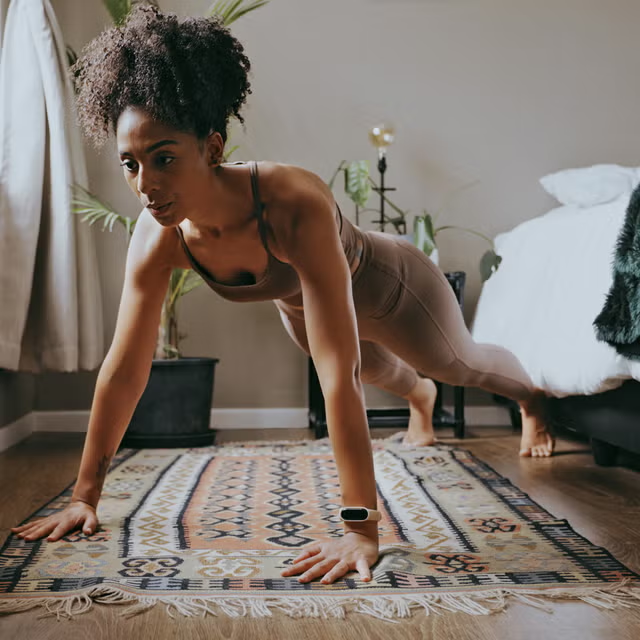
This is where it gets interesting.
When movement becomes consistent, structured, and embodied—not rushed or performative—women often start noticing shifts that don’t look like “fitness results” at all.
They pause before reacting instead of snapping into tension.
They notice their breath in the middle of stress before things escalate.
They stop bracing their shoulders while answering emails.
They walk differently—more grounded, less hurried.
They feel more present in conversations instead of half-disconnected.
They recover faster after emotional or physical stress.
And maybe most importantly: They stop feeling like their body is something they’re constantly managing. It becomes something they’re in relationship with again.
Why Pilates Creates This Shift Differently
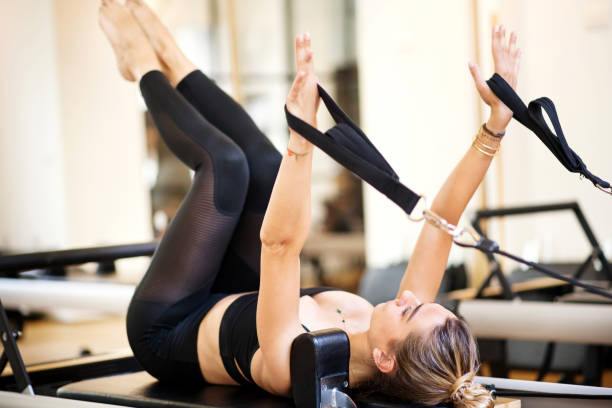
Not all movement practices create this effect.
Pilates is specific. It teaches:
- where your body is in space
- how to organize effort
- how to stabilize before you move
- how to breathe under load
- how to build strength without collapse or compensation
This matters because your nervous system learns through repetition. Over time, this creates something most fitness approaches miss:
Capacity.
Not just physical capacity—but life capacity.
So when you repeat:
- controlled effort instead of strain
- grounded breath instead of holding
- supported movement instead of pushing through
You’re not just building strength. You’re building a different internal baseline.
A steadier one.
A more capable one.
A more responsive one.
This is why people often say: “I don’t just feel stronger—I feel more myself.”
Why Most People Miss This Connection
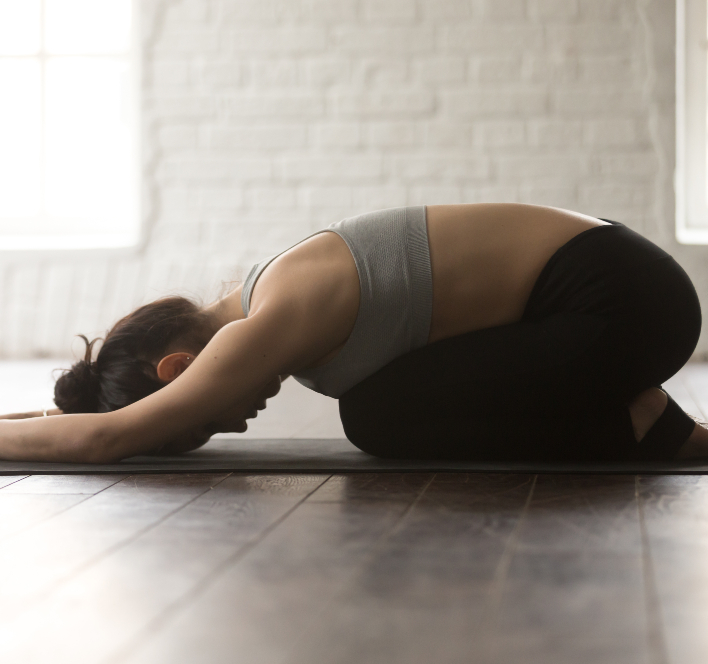
The missing piece in most fitness approaches isn’t effort.
It’s integration.
You can do a workout and still leave your body behind. You can stretch and still be disconnected. You can train hard and still feel unsupported internally.
Because movement only changes your life when it’s done with enough awareness that your body starts to reorganize around it.
This is where slowing down matters.
This is where structure matters.
This is where repetition matters.
Not because it’s rigid—but because it’s what allows the nervous system to adapt.
The Reconnect → Rebuild → Integrate method
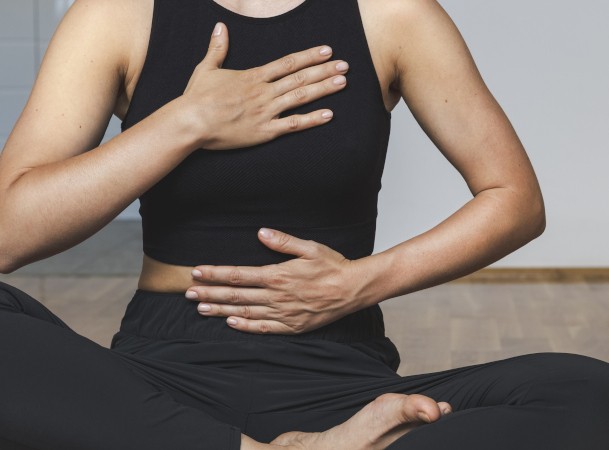
This is the framework everything in my work comes back to.
Reconnect
Most women don’t actually need more intensity. They need to feel their body again.
To notice where they’re holding tension.
To recognize breath.
To come out of autopilot.
This is where awareness returns. Not as a concept—but as a felt experience. We slow things down enough for you to actually feel your body again. Not fix it. Not judge it. Just reconnect to it.
Rebuild
Once connection is present, we build strength that supports your life—not overrides it. This is where Pilates structure matters. Not as restriction—but as support.
We layer strength gradually so the body can trust load again. We build control so movement feels stable instead of chaotic. We create capacity instead of depletion.
Integrate
This is where everything changes, because now movement doesn’t end when class ends. It shows up in how you sit.
How you walk.
How you respond.
How you breathe under pressure.
How you recover.
How you carry yourself in the world.
This is the point where movement becomes life practice. It stops being something you “do”…and becomes how you live.
What "Ascension" Means in This Work
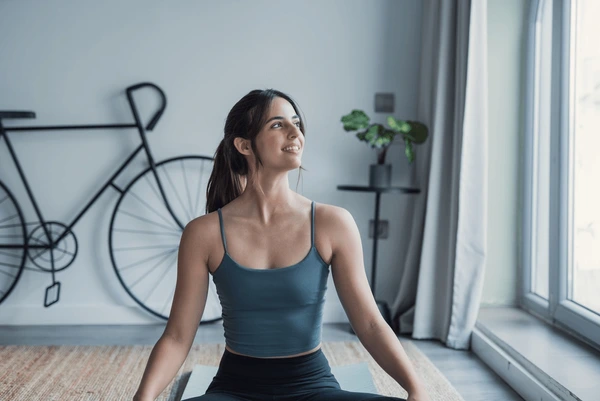
Ascension isn’t about becoming more advanced or more perfect. It’s not about optimizing your body or perfecting your practice. It’s about becoming more embodied.
More aware. More steady inside yourself. More capable in your own life.
And it doesn’t happen in big dramatic shifts. It happens in small repetitions:
One breath where you notice. One moment where you soften instead of brace. One practice where you return instead of disconnect.
Over time, those moments accumulate. And they change how you live.
If this resonates, you don’t need to overhaul your life to begin. You don’t need a perfect routine or more discipline. You just need a place to start reconnecting.
Begin here: Return to Your Body (Free 5-Minute Reset)
A simple guided practice to help you reconnect with breath, posture, and presence.
Or go deeper: Private Sessions
Personalized Pilates designed to rebuild strength, restore confidence, and support the way you actually live.
Or join locally: Community Education Classes
Structured group Pilates experiences designed to help you build strength and confidence over time.
Thank you for being here. I’m glad you found your way.
Join the newsletter for thoughtful insights, resources, and updates.
Come say hi on Instagram.