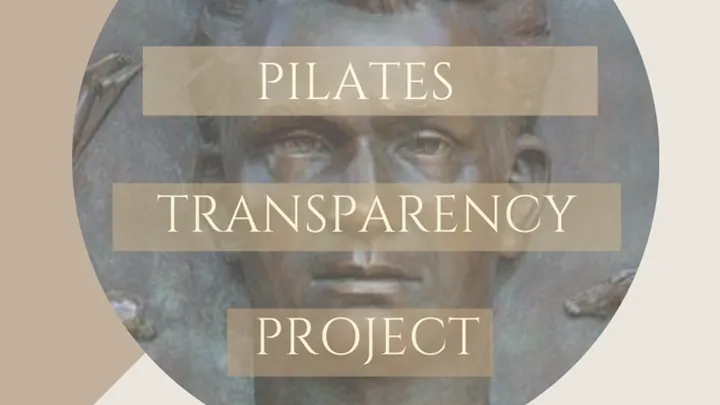
The Pilates Transparency Project
Pilates is more than a method.
It is a lineage, a philosophy, and a living body of work passed from teacher to student for generations.
As a Pilates teacher and lifelong student of this work, I believe deeply in honoring Joseph Pilates—not only through movement, but through education, access, and historical integrity. The roots of Pilates matter. And right now, those roots need our collective attention.
For decades, Pilates instructors have shared historical photographs, writings, and imagery of Joseph and Clara Pilates as a way to connect students to the origins of the method. These materials have long been part of our shared educational landscape, referenced in books, studios, trainings, and online spaces worldwide.
In recent years, however, the simple act of sharing vintage Pilates images has become a source of confusion and concern within the community. Instructors and studios have received takedown notices or legal threats related to historical materials that many believed to be part of the public domain. As a result, some teachers have chosen to remove content or self-censor, not out of wrongdoing, but out of uncertainty and fear of legal repercussions.
At the center of the current conversation is Mary Kelly of True Pilates Boston, who is now being sued for copyright infringement after sharing historical Pilates images on Instagram. Her case has become a focal point not because it is unique, but because it brings a long-standing issue into clear view: who, if anyone, has the right to control access to the visual history of Pilates?
This lawsuit matters to every Pilates professional.
At stake is not just one individual or one social media post, but the broader question of what materials are truly in the public domain and how we, as a community, are allowed to reference the origins of our work. Historical photographs and documents are not merely decorative, they are educational tools that help preserve the integrity, context, and evolution of the Pilates method.
Joseph Pilates was far ahead of his time. His work continues to inform and inspire movement professionals around the world, and there is still much to learn from his teachings. Protecting access to historical materials ensures that Pilates remains a living tradition, grounded in its roots rather than disconnected from them.
This is not the first time the Pilates community has faced a defining moment. In 2000, instructors came together to defend the right for the word “Pilates” to be used freely, and the community prevailed. That collective effort helped ensure that Pilates could grow, evolve, and remain accessible to all.
Today, we are again being asked to stand for the future of this work by clarifying its past.
Below is the official statement shared by the Pilates Transparency Project, which speaks powerfully and collectively to this moment:
To All Pilates Friends, Professionals and Practitioners
We need your help.
As many of you know, the simple act of sharing vintage Pilates photographs and materials — all of them widely seen and shared in the past — is under attack. In the past year or two, beloved Pilates instructors everywhere have had their social media pages and websites taken offline by Sean Gallagher and his company, Richtone Designs. Countless others have either been threatened or have chosen to self-censor, fearful of exercising what should be their right.
Now, our Pilates colleague Mary Kelly of True Pilates Boston is being sued for copyright infringement by Richtone after posting historical Pilates photos on Instagram.
This lawsuit impacts you directly: it provides all of us in the Pilates community with the opportunity to know what materials are in the public domain and what (if any) are not.
Since the early 1990s, even as the Pilates field has expanded and grown, our ability to reach back into our collective history has been stymied. Joe Pilates was far ahead of his time, and there is still much to discover about his method and insights. This is why it is so important that our community retain access to historical documents.
Moreover, as Pilates practitioners, we must preserve our right to refer to the founder of the Pilates Method, not just in words, but in images.
This lawsuit will benefit our community and help us to honor Joe Pilates. Now is the time to act.
With Mary’s case, we have a unique moment to defend our history. In 2000, our community came together to defend the word Pilates for all of us to use — and we won. Now we must come together again to help affirm in a court of law that no single entity has rightful ownership over the visual materials that depict Joseph and/or Clara Pilates or reference Pilates exercises.
Helping Mary Kelly with her legal representation helps all of us.
Please donate. One hundred percent of donations go directly to Mary’s legal bills. Every contribution matters.
If you feel called to support this effort, I encourage you to learn more and donate if you are able. You can also help by staying informed, sharing responsibly, and engaging in thoughtful conversation within our community.
The Pilates Transparency Project
This moment is about honoring Joseph Pilates, protecting our shared history, and ensuring that future generations of teachers and students can learn from the roots of this work—clearly, ethically, and without fear.
Pilates belongs to all of us. And our history deserves to be preserved with care.
Thank you for being here. I’m glad you found your way.
Join the newsletter for thoughtful insights, resources, and updates.
Come say hi on Instagram.